Tag: writing

  • Take Me to the Beach

    There’s something about the beach that softens everything sharp. It softens my shoulders, my breath, my grip on the never-ending to-do list I carry in my head like a shadow. It’s the one place where I can truly exhale. Not just the kind of exhale we fake between tasks, but the kind that feels like it comes from somewhere deep in the chest as if my soul finally unclenched.

    At home, I struggle to sit still. My couch can feel like a trap, my phone a constant buzz of reminders and expectations. Even rest starts to feel like another box I need to check off properly. And so I pace. I clean. I worry. I do, and do, and do, until I forget what it means to simply be.

    But take me to the beach, and suddenly, the rules change.

    It doesn’t matter if I’ve been productive that week or if my inbox is overflowing. It doesn’t matter what time it is, what day it is, or how many things I should be doing. When my toes hit the sand, and the sound of the waves rises to meet me, all that noise just… dissolves. There’s only sunshine, salt air, and the rhythm of the ocean, like a lullaby for the nervous system.

    It’s not just the peace; it’s the permission. The beach gives me the rare and sacred permission to rest without guilt. To lie back in my chair, put on some country or rock (depending on the mood), and let the world go on without me for a little while. And somehow, it always does.

    The ocean speaks in a language that bypasses the mind entirely. It’s not logical or productive. It’s primal and timeless. When I sit at the edge of it all, waves rushing in and out, gulls circling above, the sun dipping lower, I remember who I am outside of the rush. I remember what matters. I remember how blessed I am.

    And the best part? I get to share that space with someone I love. My boyfriend and I have made the beach a sacred place for ourselves. It is our quiet retreat, a reset button, a memory bank that we keep building together. There’s nothing better than sitting side by side, feeling the breeze tangle through your hair, exchanging a glance that says: Yeah, this is the good stuff.

    The beach reminds me that life doesn’t always have to be a race or a performance. Sometimes, it’s enough to exist. To breathe. To feel joy without conditions.

    So, if you’re like me, if you ever find yourself stuck in that loop of doing, fixing, and proving, consider this your invitation to unplug. To find your shore. To trade burnout for bare feet and pressure for peace. Take a break, take a beat, and take yourself to the beach.

    You might just find that everything you were searching for was waiting for you in the waves all along.

  • When the Unexpected Happens: Learning to Stay Steady

    There’s this moment, maybe you’ve felt it too, when something at work veers off the usual path. A monitor flashes a reading you’ve never seen before. A process suddenly fails. A piece of equipment you’ve relied on a hundred times decides today is the day it won’t work. And you’re the one standing there, expected to know what to do.

    In those moments, my mind races. My stomach tightens. I can feel the heat rise in my face. I’ve always had this tendency to get anxious when something unfamiliar pops up, especially at work. It’s like my nervous system doesn’t pause to ask, “Is this truly an emergency?” before launching into full-blown alarm mode.

    In healthcare, sometimes it is a matter of life and death. Our environments are fast-paced and high-stakes, and a certain level of vigilance becomes second nature. But not everything is a crisis. Some things are just unexpected. Unfamiliar. Inconvenient. Solvable.

    And still, I’ve noticed how quickly I jump to worst-case thinking, how I internalize the problem, replay every moment, and get stuck in my head even after the issue is resolved. The self-awareness is there, for better or worse. I recognize my overreactions almost as soon as they happen, which can be both a gift and a frustration. I see the spiral as it’s happening, and I wish I could stop it in its tracks.

    Lately, I’ve been reflecting on what it would look like to have a more grounded, measured response when things don’t go as planned. To slow down before reacting. To trust that I’m capable, even when the problem is new. To remind myself that I don’t have to know everything to find a solution and that most challenges can be worked through with time, teamwork, and a deep breath.

    Perspective is powerful. I just wish I could access it in the moment, not just in hindsight. Because when I zoom out, once the moment has passed, I can see how inflated my reaction was. How the thing that felt catastrophic was really just… a hiccup. A lesson. An opportunity to practice resourcefulness.

    So here’s what I’m working on: giving myself more grace when the unexpected happens. Building a mental pause button. Letting the first wave of emotion pass before deciding how to act. And asking myself: is this truly urgent, or just unfamiliar?

    Not every problem needs panic. Some just need patience.

    If you’re wired like me, if you feel things deeply and react quickly, I see you. It’s hard to change the wiring. But even the smallest shifts in awareness can soften the response. And maybe, over time, those small shifts become our new baseline.

    We’re all learning. We’re all adapting. And with each unexpected moment, we get the chance to try again.

  • Blackberry Moments

    Welcome to a new kind of conversation. One that walks beside you instead of rushing ahead. This space, much like a quiet path on a slow afternoon, is where we notice the smaller things. The meaningful things. The ones we usually overlook while racing from one task to the next.

    I’ve been meaning to begin this journey for a while. The idea sat with me for months, maybe years. I told myself I would start when I felt more ready, more polished, more certain. But the truth is, waiting for perfect conditions often means waiting forever. So here I am, showing up anyway. No fancy setup, no script written in stone, just an open heart and a desire to connect. If you’re here, thank you for walking this path with me.

    Recently, I read Unscripted by Ernie Johnson Jr., the longtime host of Inside the NBA. If you’ve ever seen the show, you know him as the guy alongside Shaq, Charles Barkley, and Kenny Smith. But his book is not about sports commentary. It’s about life. Honest, messy, soulful life. It made me laugh, cry, and pause in the best way possible.

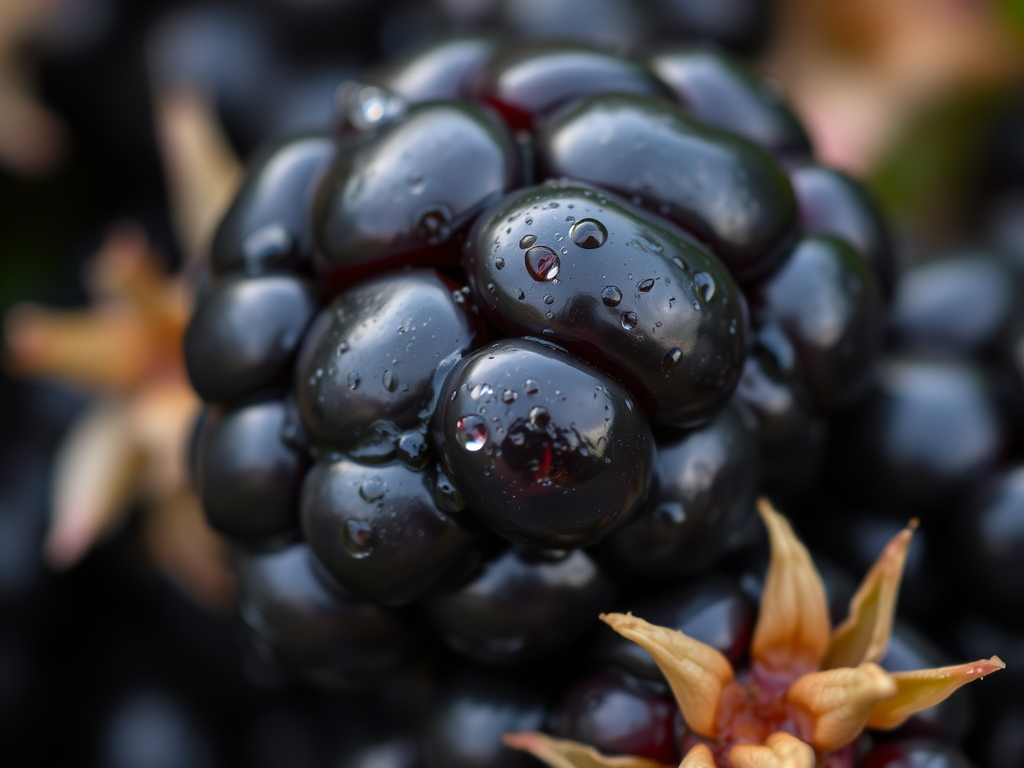
    One of the stories he shares has stayed with me, and I think it will stay with you too. Early in the book, he introduces the idea of what he calls blackberry moments. He defines them simply as moments so sweet that you savor the taste for a lifetime.

    The name comes from a story about a little league baseball game he played as a kid. During the game, someone hit a ball way out into the outfield, far enough to disappear over the fence. While everyone paused to wait for the ball to be retrieved, the outfielders didn’t come back right away. When the coaches went to look for them, they found the boys standing in a patch of wild blackberry bushes just beyond the fence, happily picking and eating the berries.

    They forgot about the game for a moment. They were caught up in the sweetness of what was right in front of them. That image struck me. Because isn’t that how life often works? We’re focused on the rules and the routines, doing what we’re supposed to do, and then something unexpected and beautiful catches our attention. It’s often small and fleeting, but somehow it stays with us.

    Ernie weaves blackberry moments throughout the book. They are not grand or showy. They’re quiet, real, and deeply human. And they got me thinking about my own.

    One that always comes to mind is a memory from my childhood. It happened more than once, but each time felt just as vivid. When I was around seven or eight, our family had a little routine. Once a week, my mom, my brother, my Mommom, and I would pile into the car and drive to Santori’s, our local deli and produce market. It wasn’t a far drive, but Mommom always used those few minutes to start rattling off our list. Turkey. Ham. American cheese. All the staples.

    Once we got there, we’d split up. My mom and brother would head to the produce section, while Mommom and I made a beeline for the deli counter. That’s where the real magic happened. I’d grab one of those little paper number tickets and clutch it like it was a winning lottery ticket. My whole focus became listening for our number. I took that job seriously. When they finally called it, I would walk up with purpose and recite our order with total confidence. Half a pound of turkey. Half a pound of ham. A pound of American cheese.

    Almost every time, the deli clerk would smile and hand me a slice of cheese before weighing it. That moment made my entire week. I felt important. Like I belonged in the world of grown-ups.

    After we paid and loaded everything into the car, Mommom would always open the bag of cold cuts on the ride home. The four of us would sit in the car, snacking and chatting, with the sun pouring through the windows. I remember the feel of the warm sun on my face and the salty taste of that slice of cheese. It was just an ordinary afternoon. But it was also so much more than that.

    That was a blackberry moment.

    It didn’t change the direction of my life. It didn’t announce itself as something profound. But it lingered. It settled into my bones the way only true sweetness can.

    Blackberry moments aren’t big. They aren’t dramatic. They don’t scream for your attention. They wait patiently inside the folds of your day, hoping you’ll pause long enough to notice them. They show up in the way your child’s hand fits in yours. In the way your dog greets you when you walk in the door. In the way a song makes you feel seen. Or the way your coffee tastes better when you have a minute to actually enjoy it.

    We miss so many of these moments because we are busy, distracted, or convinced that only the big stuff matters. But if there’s one thing I’ve learned from Ernie’s book, and from my own reflections, it’s this: the small things are the big things. The joy is already here. The softness, the beauty, the humanity — it’s all here, tucked inside the mundane.

    So as you go about your week, I hope you’ll keep your eyes open for your own blackberry moments. Don’t worry about chasing something extraordinary. Just be present enough to catch the ordinary while it’s happening.

    Thanks for taking this walk with me. I’ll be back again soon. But until then, take care of yourself. And keep your heart open to the sweet stuff.

  • When the Day Follows You Home

    Tuesday was a hard day.

    I’m not talking about the kind of hard that comes from missed meals or back-to-back cases (though those have their toll, too). I mean the kind of hard that lingers in your chest after the monitor alarms quiet down. The kind that follows you home. The kind that makes you sit in your car in the driveway and cry just a little, hoping the tears will create space for something lighter.

    It was one of those days where everywhere I looked, I saw people suffering in ways that go beyond physical pain. Patients with complex, advanced illnesses. Families who haven’t left the hospital in days. Exhausted faces in waiting rooms, carrying silent prayers in their eyes. And I couldn’t help but feel a heaviness, a deep, aching compassion, for what they were going through.

    There’s a unique tension in healthcare: this ever-present blend of gratitude and grief. On the one hand, I am overwhelmingly thankful for my health, the well-being of my family, and the strength to serve. However, on the other hand, I’m deeply affected by what I witness. Being close to sickness, especially the kind that lingers or complicates, brings into sharp focus how fragile and sacred good health truly is.

    In my role, I strive to be a steady, uplifting presence. I greet patients and families with a warm smile, explain things patiently, advocate for them, listen attentively, and show up every day with my heart open. I want people to feel that they’re not alone, that someone sees them, not just as a diagnosis or a chart, but as human beings navigating one of the most difficult times of their lives.

    But sometimes, I wish I could do more.

    Sometimes, I leave the hospital wondering if my kindness or calm tone made any difference. Sometimes, I feel like my efforts are a drop in a vast ocean of suffering. And while I know rationally that every drop matters, that presence, empathy, and consistency can be lifelines, the emotional weight of it all still adds up.

    This week, I’ve had to remind myself that it’s okay to feel these things. Being affected isn’t a weakness; it’s part of the privilege of this work. We get to see humanity raw and unfiltered, and that means sometimes we absorb the sorrow, too.

    If you’re a fellow clinician reading this and you’ve had your own “driveway cry,” I want you to know you’re not alone. You are not failing because you feel deeply. You are human. And in being human, you give your patients something that machines and medicine can’t offer: you provide them with care that comes from the soul.

    To anyone walking through a season of heaviness, inside or outside the hospital walls, I hope you find small moments to breathe, cry, reflect, and reset. May we all hold a little extra gratitude for our health, our families, and the strength to do what we do, even on the tough days.

  • “Sunday Scaries” and the Art of Letting Tomorrow Be Tomorrow

    It’s Sunday evening. The sun begins to dip, and with it, a subtle unease creeps in. If you’re like me, you know this feeling well — the “Sunday Scaries.” It’s that low hum of anticipatory anxiety as the weekend winds down and your mind churns with thoughts of the week ahead. Emails. Call shifts. Patient complexities. That project you haven’t finished. The unexpected. The unknown.

    Seven months ago, I started a new job that brought with it a title I was proud of, a team I was eager to serve, and a whirlwind of inner panic I wasn’t prepared for. On paper, everything looked right. But internally, I was unraveling. I cried almost every day after work. Not because the job was unusually grueling — though, like any healthcare role, it came with its weight — but because I was holding onto fear like it was my job, too.

    I second-guessed everything. I overanalyzed every interaction and every decision. I worried incessantly about what might go wrong, convinced I wouldn’t be able to handle it, and certain that when it did, it would somehow be my fault. I was overwhelmed, not by the role itself, but by the pressure I had created in my own mind. I had built a mental fortress of“what-ifs,” and I was trapped inside.

    But then, something shifted. Not all at once, but slowly, steadily.

    I began to learn the rhythm of the department. I started to identify the people I could lean on, ask questions to, and admit,“I’m not sure. Can you help me think through this?” without shame. I stopped demanding perfection of myself and instead started honoring progress. The work was still hard sometimes. Some days still are. There are long hours. Unexpected calls. Stressful situations that come with leading a team and showing up for patients. But I can do it. And more importantly — I am doing it.

    And that brings me back to Sunday evenings.

    These days, when my brain begins to wander into the world of Monday morning problems, I gently pause. I tell myself, That’s for tomorrow me to deal with. And you know what? Most of the time, Mondays are just fine. So are Tuesdays. And Wednesdays. Sometimes, they’re even wonderful. Sometimes, they’re frustrating. Sometimes, they’re exhausting. But none of them require my worry ahead of time.

    I used to steal joy from myself by trying to pre-live the week in my mind. Now, I try to stay here — in the present. I’velearned that anxiety feeds on imagined catastrophe. But peace? Peace lives in trust — in ourselves, in our process, in the truth that we don’t have to have it all figured out beforehand.

    So now, I let Sunday evenings be precisely what they are: an invitation to rest. To soften. To remember that I’ve survived every work week before this one — and I’ll do it again.

    If you’re walking through your own season of “Sunday Scaries,” know this: it doesn’t mean you’re incapable. It doesn’tmean you chose the wrong path. It means you care — maybe too much sometimes — and you’re learning. Be patient with your own unfolding. Eventually, the fog lifts, and in its place is the calm clarity that you can, in fact, handle what comes.

    And when in doubt, give it to tomorrow-you. They’re stronger than you think.